
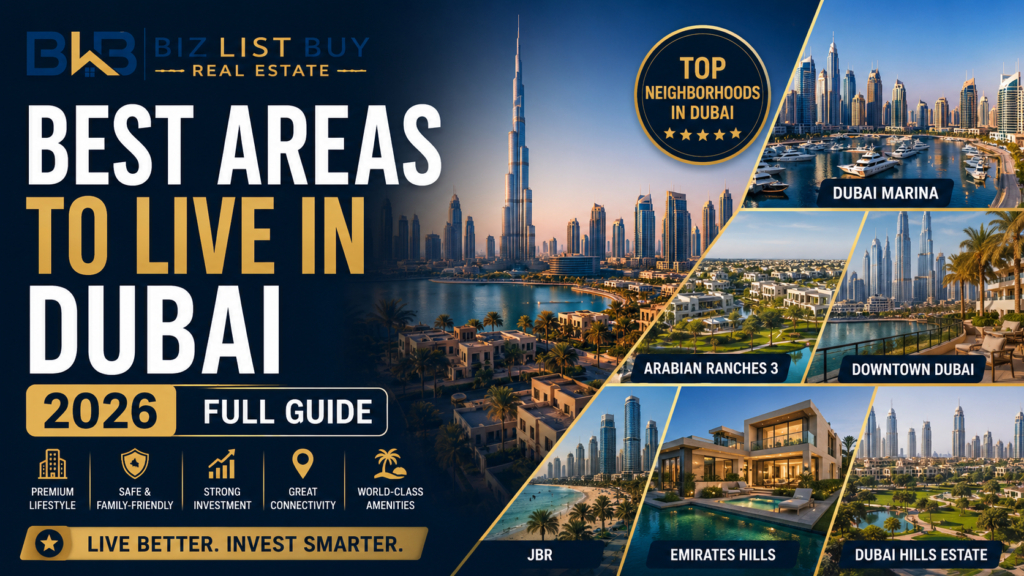
Best Areas to Live in Dubai 2026: If you’re short on time: Dubai Marina, JLT, and Downtown Dubai suit young professionals who want walkability and nightlife. Dubai Hills Estate, Arabian Ranches, and Mirdif work best for families who need villas, parks, and schools. JVC and Dubai Sports City offer the strongest value for budget-conscious buyers and renters. Palm Jumeirah and Emirates Hills remain the top choices for luxury living. The right area for you depends on your budget, commute, and lifestyle priorities more than anything else.
Moving to Dubai, or moving within it, is one of those decisions that quietly shapes everything else. Your neighborhood decides your commute, your weekend routine, your rent, and honestly, your mood on a Tuesday evening stuck in traffic. With the city’s population expected to cross 4 million residents in 2026, growing at a compound annual rate of roughly 3 to 3.5 percent according to the Dubai Statistics Center, the range of communities on offer has never been wider, and the stakes of choosing the wrong one have never been higher.
This guide breaks down the best areas to live in Dubai in 2026 by who they actually suit, not just by how nice the marketing photos look. We’ll also cover the buyer basics that matter before you sign anything: current price ranges, legal fundamentals like freehold versus leasehold, and the fees you should budget for as a first-time buyer or investor.
How to Choose the Right Dubai Neighborhood
Rank your budget, commute, lifestyle, and family needs in order of importance before you compare neighborhoods by name. The “best” area in Dubai is simply the one that matches your top two or three priorities, not the one with the most Instagram-famous skyline.
Before falling in love with a view, work through these four questions:
- Budget — rent and purchase prices swing dramatically between waterfront towers and inland communities.
- Commute — test the actual drive or Metro trip at peak hours, not the distance on a map.
- Lifestyle — do you want nightlife and walkability, or quiet, green, and community-focused?
- Family needs — proximity to schools, parks, villas, and safe outdoor space.
Best Areas for Young Professionals
Dubai Marina, Jumeirah Lake Towers (JLT), and Downtown Dubai are the top picks for professionals who want walkability, nightlife, and easy access to work hubs like DIFC and Business Bay.
Dubai Marina
Dubai Marina remains the poster child for expat life in Dubai — a dense, walkable waterfront district with beach access at JBR, a strong café and gym culture, and tram and Metro links that make a car optional. Studio rents typically sit between AED 65,000 and 90,000 a year, with one-bedrooms ranging from AED 95,000 to 140,000. It suits singles, couples, and remote workers who want everything within a ten-minute walk.
Jumeirah Lake Towers (JLT)
JLT sits right beside Marina but at a noticeably lower price point, with its own Metro station and a calmer, lakeside feel. It’s the practical choice for professionals who want Marina-adjacent living without Marina-level rent.
Downtown Dubai & Business Bay
Downtown is home to the Burj Khalifa and Dubai Mall, and it carries a premium accordingly — studios run AED 75,000 to 95,000, with one-bedrooms from AED 110,000 to 150,000. Business Bay next door offers a more balanced alternative, with studios from AED 60,000 to 80,000, plus a fast-growing dining scene and strong resale demand. Both put you minutes from the business district, which matters if your commute is the thing you value most.
Best Areas for Families
Dubai Hills Estate, Arabian Ranches, and Mirdif are the strongest family communities in 2026, offering villas or townhouses, parks, schools, and a quieter pace than the central districts.
Dubai Hills Estate
A master-planned community sitting almost exactly between Downtown and Marina, Dubai Hills Estate combines villas, townhouses, and apartments with a golf course, Dubai Hills Mall, and several international schools inside the community itself. One-bedroom apartments run roughly AED 100,000 to 130,000, while villas range from AED 200,000 to 350,000. It’s a favorite for families who want modern infrastructure without sacrificing a central location.
Arabian Ranches
One of Dubai’s original villa communities, Arabian Ranches offers wide streets, mature landscaping, gated sub-communities, and a genuinely established family feel. It requires a car, since it sits away from the busiest parts of the city, but for many families that trade-off is the entire point.
Mirdif
Mirdif is older and less flashy than Dubai Hills, but it offers larger villas for the price, proximity to the airport, and a settled, suburban character. Villa rents typically fall between AED 120,000 and 200,000 — meaningfully less than newer family communities of comparable size.
Best Areas for Value and Budget
Jumeirah Village Circle (JVC), Dubai Sports City, and International City offer the lowest rents among established Dubai communities, making them the go-to choice for first-time renters and buyers watching their budget.
- JVC — Studios from roughly AED 45,000 to 65,000 and one-bedrooms from AED 65,000 to 95,000, with newer buildings and a fast-growing retail scene. Choosing JVC over Marina or Downtown can realistically save AED 20,000 to 40,000 a year in rent alone.
- Dubai Sports City — Apartments clustered around sporting venues, with pricing generally below Marina and Downtown for comparable unit sizes.
- International City — Among the most affordable areas in Dubai, with studios from around AED 30,000 to 45,000, though the trade-off is a longer commute to prime districts.
Best Areas for Luxury Living
Palm Jumeirah, Emirates Hills, and Jumeirah remain Dubai’s top luxury addresses in 2026, offering beachfront apartments, gated mansions, and established low-rise prestige respectively.
Palm Jumeirah delivers beachfront apartments and villas with some of the strongest brand recognition in the region, while Emirates Hills is built around gated mansions and a golf course for buyers who want privacy above all else. Jumeirah blends beach access with a low-rise, established feel that appeals to long-term residents rather than short-term investors. Dubai Creek Harbour has also emerged as a strong alternative for buyers who want waterfront calm without full Downtown or Marina intensity, with one-bedroom rentals generally between AED 95,000 and 150,000 depending on the tower and view.
Dubai Real Estate: Prices and Market Context in 2026
Dubai’s property market isn’t just growing — it’s setting records. Dubai’s real estate sector recorded transactions exceeding AED 917 billion across roughly 270,000 deals in 2025, a 20 percent jump in value year-on-year, according to the Dubai Land Department. That momentum has continued into 2026, with transaction value up 31 percent year-on-year in the first quarter alone. Dubai Marina, Business Bay, and Palm Jumeirah consistently rank among the highest-value areas by transaction volume, which tells you where both resale demand and rental demand are strongest.
For buyers weighing whether to rent or purchase, this liquidity matters: an area with consistently high transaction volume is generally an area where you’ll find it easier to resell or re-let later.
Buyer Basics: Legal Fundamentals Every First-Time Buyer Should Know
Foreign buyers can own property outright in Dubai’s designated freehold areas, which include most of the communities covered above. Outside these zones, ownership is typically leasehold, meaning long-term usufruct rights rather than full title.
A few fundamentals worth knowing before you buy:
- Freehold vs. leasehold — Freehold ownership gives you full title to the property and land, available to UAE nationals, GCC nationals, and foreign buyers in designated freehold zones. Leasehold arrangements grant usufruct rights of up to 99 years without transferring land ownership.
- DLD registration and fees — Buyers typically budget for the Dubai Land Department’s transfer fee, along with agency commission and trustee office charges, on top of the purchase price.
- Mortgages for expats — UAE banks do offer mortgages to eligible expats, though approval depends on income, residency status, and down payment size.
- Golden Visa eligibility — Property investors with qualifying property value can apply for the UAE’s long-term Golden Visa, linking ownership directly to residency.
Because fees, eligibility rules, and freehold zone boundaries can shift, it’s worth confirming current requirements before signing anything, and pairing that research with a browse through live listings on bizlistbuy.com to see how these areas are actually priced today.
Mistakes to Avoid When Choosing a Dubai Neighborhood
- Picking a community for its name or skyline view rather than your actual daily routine.
- Skipping a peak-hour commute test before committing to a year-long lease or a purchase.
- Overlooking service charges, parking, and Salik toll costs in your total budget.
- Assuming every “family-friendly” area has school places available — always check first.
- Buying or renting sight-unseen without verifying the building’s maintenance record and developer track record.
FAQs
1. What is the best area to live in Dubai in 2026?
There’s no single best area — it depends on your budget, commute, and lifestyle. Professionals often prefer Dubai Marina, JLT, or Downtown for walkability, families lean toward Arabian Ranches, Dubai Hills, or Mirdif for space and schools, and value-focused buyers choose JVC or Dubai Sports City for lower costs.
2. Where is the cheapest place to live in Dubai?
International City, JVC, and Dubai Sports City are among the most affordable established communities, though they typically involve a longer commute to central business districts like DIFC and Business Bay.
3. Can foreigners buy property in Dubai?
Yes. Foreign nationals can buy freehold property in designated zones, which cover most of Dubai’s major residential communities, including Marina, Downtown, Palm Jumeirah, and JVC. Outside these zones, ownership is typically leasehold.
4. Is it better to live in Downtown Dubai or Dubai Marina?
Downtown suits buyers who want to be near the business district and Dubai Mall, with a premium, city-centre feel. Marina suits those who prioritize waterfront living, beach access, and a more social, relaxed atmosphere. Neither is objectively better — it comes down to whether you value centrality or lifestyle energy more.
5. What is the best area in Dubai for families?
Dubai Hills Estate, Arabian Ranches, and Mirdif are consistently the strongest choices for families, offering villas or townhouses, nearby schools, parks, and a quieter pace than the central apartment districts.
6. How much has Dubai’s real estate market grown in 2026?
Dubai’s real estate transactions reached AED 917 billion across roughly 270,000 deals in 2025, and value rose a further 31 percent year-on-year in the first quarter of 2026, according to Dubai Land Department data.
7. Do I need a car to live in Dubai?
Not necessarily. Metro-connected areas like Dubai Marina, JLT, and Downtown can make a car optional. Villa communities such as Arabian Ranches and Mirdif generally require one, since they sit further from Metro lines.
8. What should I check before signing a lease or purchase agreement in Dubai?
Confirm the freehold or leasehold status, review the RERA Rental Index for the area, check service charges and building maintenance history, and test your actual commute at peak traffic hours before committing.
9. Which Dubai area has the best rental yields for investors?
Value-focused and emerging communities such as JVC and Dubai Sports City often deliver higher rental yields than prime waterfront addresses like Marina or Palm Jumeirah, since purchase prices are lower relative to achievable rent. Overall market yields in Dubai have been reported in the mid-single digits up to around 7 percent, depending on the community and property type.
10. Should I buy ready or off-plan property in a Dubai neighborhood?
Ready properties offer immediate move-in or rental income and let you inspect the finished building before committing. Off-plan properties often come with more flexible payment plans and potential capital growth, but carry construction and delivery-timeline risk. The right choice depends on your timeline, risk tolerance, and whether you need the property to generate income right away.
Final Thoughts
Dubai’s growth isn’t slowing down, and neither is the range of neighborhoods competing for your attention in 2026. The right choice isn’t the most photographed one — it’s the one that fits how you actually plan to live, commute, and spend your evenings. Whether you’re drawn to Marina’s waterfront energy, Dubai Hills’ family-friendly infrastructure, or JVC’s value-for-money appeal, matching the area to your real priorities will save you far more than money.
Also Visit: Renting vs Buying in Dubai 2026: Full Cost Breakdown
